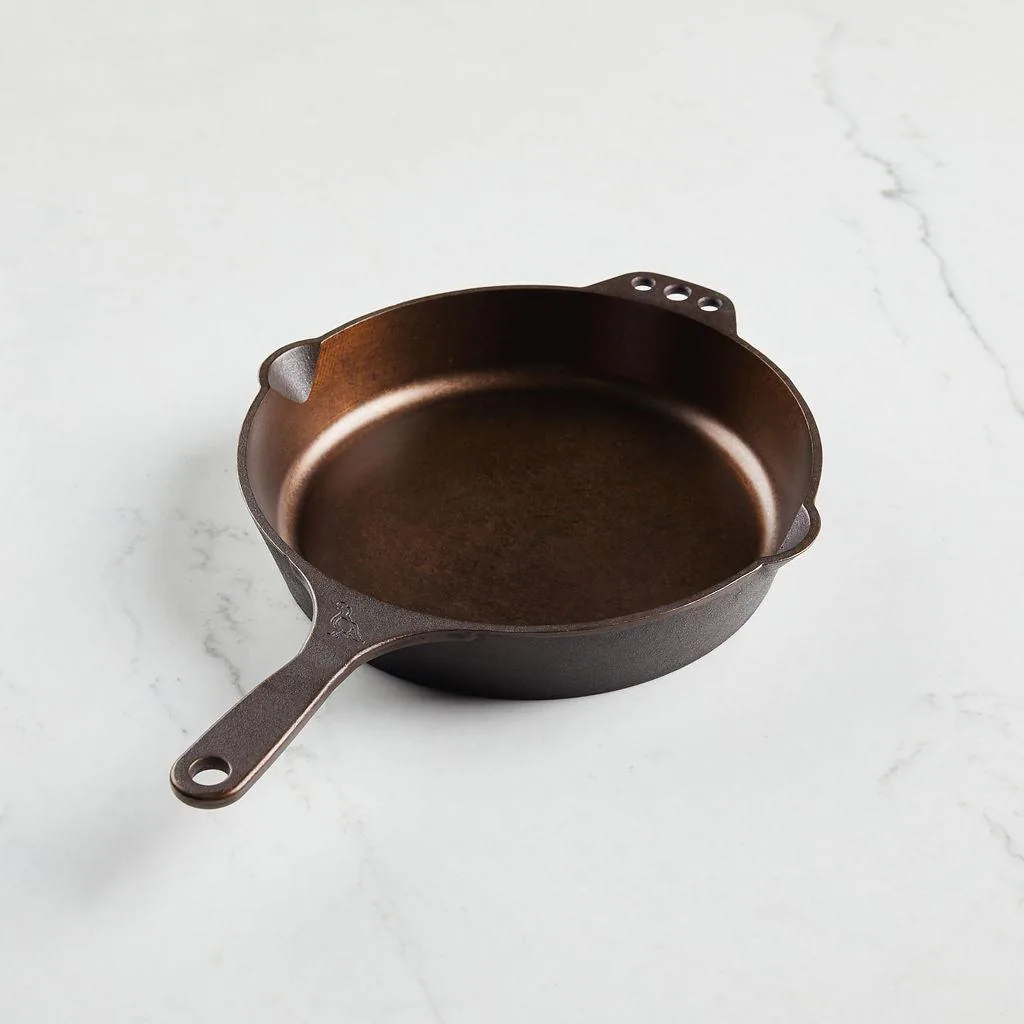
Factory Second No. 10 Skillet
A factory second, not a lesser skillet
NOT VERIFIABLE as of 2026-10-07: no price in the brand page's structured data. The figure shown was read from the maker's own page when the record was made; it is no longer being re-checked.
We earn a commission. It never changes the price you pay.
This is the same No. 10 skillet Smithey pours and finishes in Charleston, set aside for a cosmetic flaw somewhere on the surface or handle. Nothing structural, nothing that touches how it cooks. Cast iron holds heat the way cast iron always has: slow to come up, slow to let go, forgiving on a crowded line where the flame gets shared. It goes from stovetop to oven without a second thought. On a station where pans get dropped, stacked, and handed off between cooks all night, a scratch or a pour mark isn’t the thing that’s going to bother you. What matters is that it heats even and holds steady, service after service.
Price we've observed
Every point is a price this site read on the maker's own page on the day shown. It is not a market low, and it is not scraped from a price tracker — it is only what we have seen ourselves. Today's price is the lowest we've recorded.
A quick tomato pan sauce is fine, but a tomato sauce simmered for an hour eats the seasoning off cast iron and tastes of metal. Make the long sauces in stainless and save the skillet for searing.
A line doesn't need a showpiece, it needs a pan that survives the shift. A factory second earns its spot because the flaw is skin deep and the iron underneath does the same job as a first-quality piece: hold heat, season up, cook a hundred proteins the same way twice. In a kitchen where pans get thrown in a bus tub at midnight, that's the pan you don't worry about.